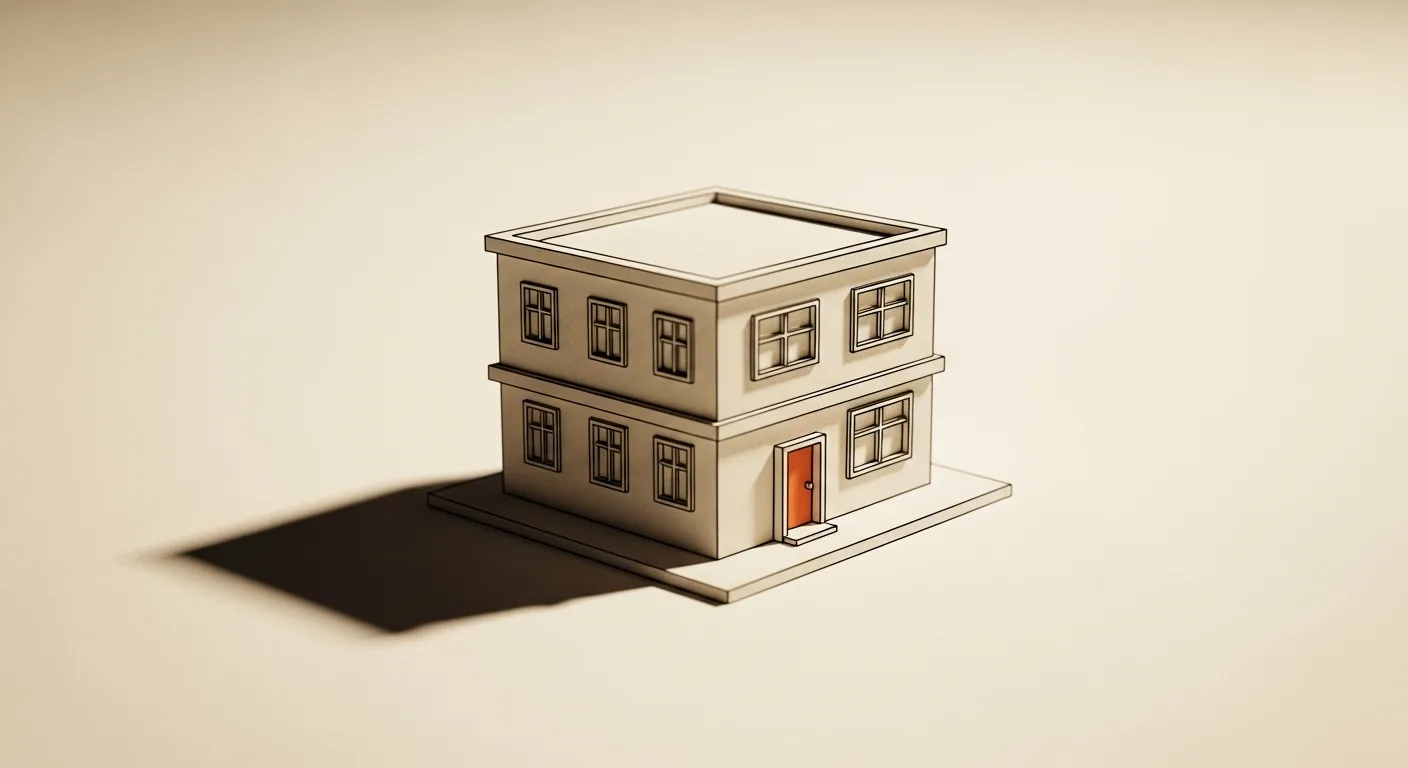
While managing The FuseBox innovation hub at Wired Sussex in 2021, I built a scale replica of the actual building in Mozilla Hubs’ Spoke editor.
It started small. We needed somewhere to meet remotely during the post-2020 hybrid era, and the off-the-shelf Hubs rooms (industrial loft, mountain cabin, modernist gallery) felt like meeting in a stock-image meme. Building a copy of our real office made the virtual meetings feel like ours. Posters in roughly the right places. The mezzanine you had to walk up. The kitchen, the back room, the slightly suspect bathroom door. People who’d been to the real FuseBox would walk into the scene and laugh, which was the right reaction.
What it actually is
A scene file authored in Spoke, the visual scene editor that came with Mozilla Hubs. The geometry was built from a combination of room measurements, photos, and a Matterport reference, then dressed with stock and custom assets. The scene exported to GLB, hosted on Hubs’ platform, and anyone with the URL could join in a browser without installing anything. No headset needed, mouse-and-keyboard or touchscreen all worked.
The Hubs runtime gave us multi-user voice and presence for free, plus the ability to spawn media (images, videos, 3D models, scribbles) directly into the space. That made it useful as a meeting room and as a small demo theatre: drop a 3D model into the centre of the office, three people from anywhere in the country walk around it together, conversation happens.
The academic adoption
The unexpected bit was what happened years later. A 2024 peer-reviewed paper, Navigating crises in virtual spaces: a usability evaluation of Virtual Reality training in LIS education on ResearchGate, used the FuseBox Office Space template as the base environment for a study on VR training scenarios. The researchers built crisis-response training inside the room and evaluated how Library and Information Science students navigated and interacted with the space. The published figure credits the template by name.
I had no involvement in the study. The template was just there, on Hubs, free to remix, and somebody who needed a built-out small-office environment found it useful enough to build their work on top of. That’s one of the very few times a thing I’ve made has shown up in a paper, and almost certainly the only time a coworking-space replica has.
What I took from it
Two small lessons. The first is that the highest-leverage thing you can sometimes build is the empty stage somebody else needs. Hubs in 2021 had plenty of generic environments and almost no specifically scaled, specifically dressed office spaces. The gap mattered to one team somewhere I’d never heard of.
The second is the day-2 fragility every Hubs-built thing now shares. Mozilla pivoted Hubs to a paid product and then sunsetted the hosted service. Spoke is no longer the default; self-hosting Hubs through AWS is expensive and fiddly. The template still exists in archived form, but spinning it back up takes a working day of plumbing. The same lesson I keep writing about in Alternative Stages: public-platform creative-tech projects live as long as the platform underneath does.