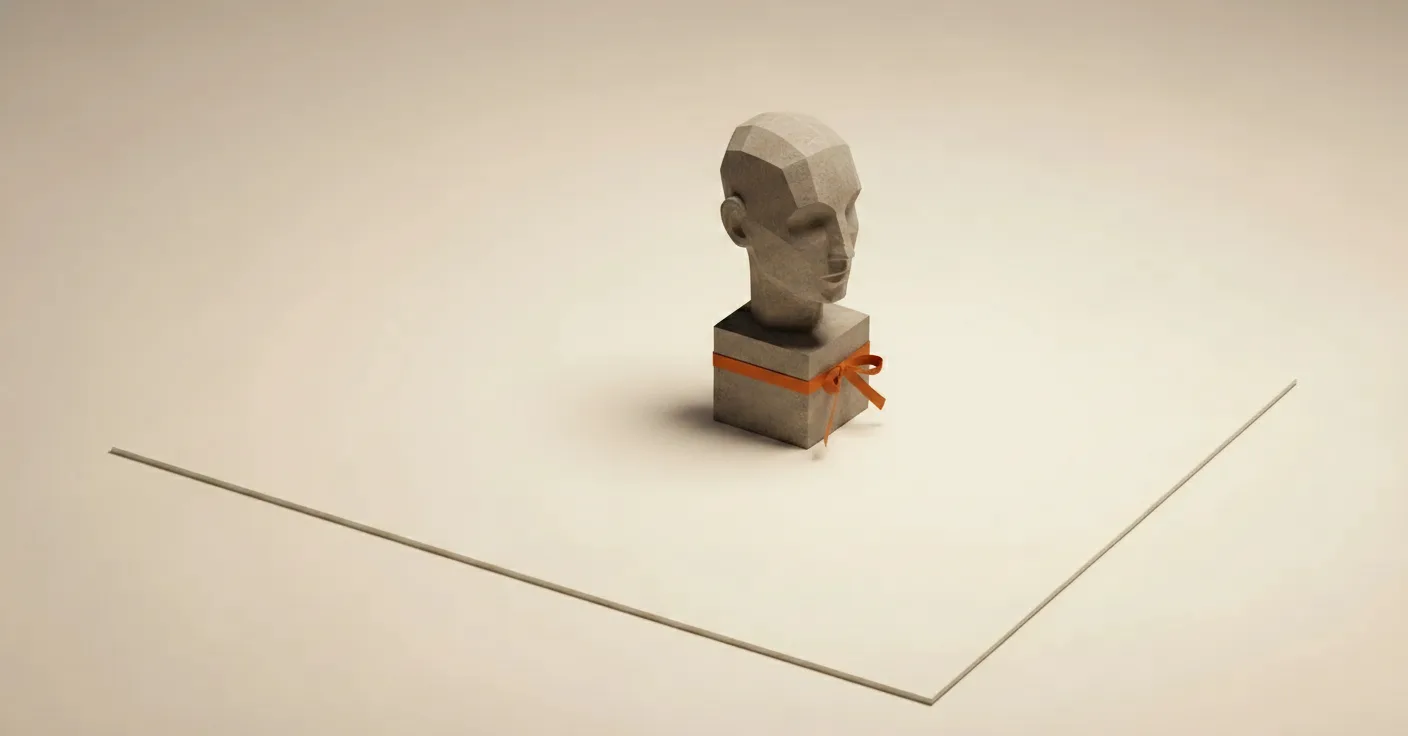
Creative Giants brought me in on a project for Crisis UK’s winter campaign, produced with adam&eveDDB. The brief was specific: take photographs of 17 people supported by Crisis and create a single synthetic face that could represent the reality that homelessness can happen to anyone.
The technical work
I used open-source AI image generation tools to blend and synthesise the 17 source photographs into a single coherent composite face. The goal wasn’t a mathematical average. It was a face that looked like a real person, with enough of everyone in it that no single individual was identifiable.
Once the composite was generated, I built a MetaHuman in Unreal Engine 5 based on the output. This digital human served as the detailed reference for sculptor Sophie de Oliveira Barata, who used it as a blueprint to construct the final 4.3-metre, 2.5-tonne hyper-realistic sculpture named “Alex.”
The campaign
The sculpture was installed at London’s King’s Cross station on December 5, 2022, before moving to Birmingham’s Bullring. The campaign insight, that the more homeless people we see, the less we really see them, drove the decision to create something impossible to walk past. A 50-second film premiered on Channel 4, and QR codes on the installation linked to individual stories and donation opportunities.
Why it matters
This was one of those projects where the technology serves something larger than itself. The AI wasn’t generating content for its own sake. It was synthesising real human stories into a single face that could make homelessness feel personal and unavoidable. It’s the kind of use case that shows generative AI at its best: revealing humanity rather than obscuring it.