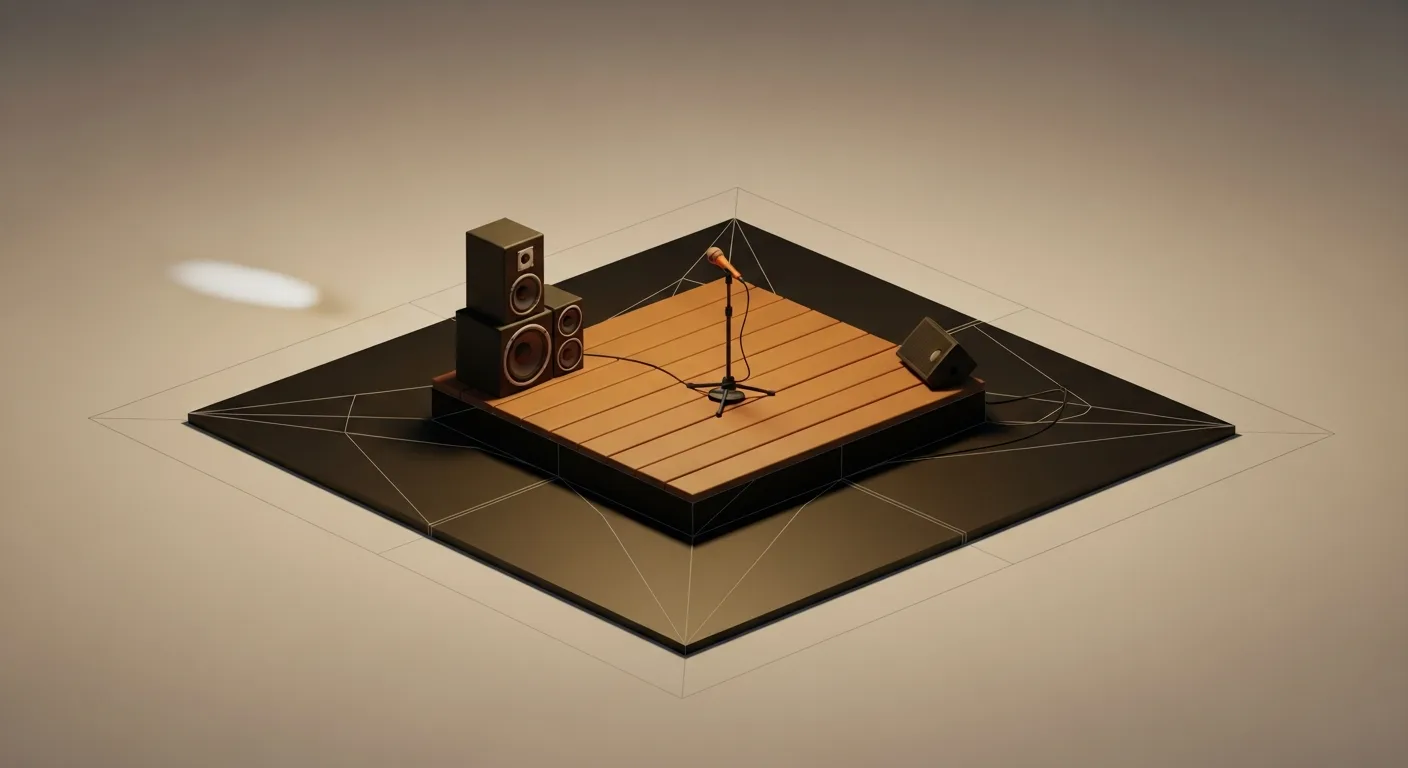
Alternative Stages is a multi-user WebVR gig platform built with Wired Sussex. We LIDAR-scanned four Brighton venues, recorded live performances inside them, and launched the result at the Brighton 5G Music Festival.
The problem
Although the digital music industry had been burgeoning, there was a palpable absence of truly immersive virtual gigs. Most platforms merely offered a 360-degree video experience that left the viewer isolated, cutting off the sense of community that underlies the charm of live gigs. My vision was to design a solution capable of offering an interactive, immersive, and social VR experience.
How we built it
Alternative Stages is a WebVR platform that brings Brighton’s grassroots music venues into the browser. You can watch live or pre-recorded gigs from home while keeping the spirit of a live concert, with genuine six degrees of freedom, so you can walk the venue, talk to other attendees, and watch the performance from anywhere in the room.
The journey started with venue selection, guided by our partner PlatformB. We opted for venues iconic to Brighton’s music scene: The Green Door Store, The Hope and Ruin, St Georges Church, and the Brighton Dome Auditorium. Each venue was digitally recreated using a combination of Polycam’s LIDAR scanning and Matterport Pro 2 3D scanning.
For performances, we strategically planned artist recordings to integrate with the 3D environments, maintaining static lighting to match the scanned venues and employing 4k video to capture performances. We used AWS S3 for hosting and Mozilla Hubs as our open-source multiuser WebVR platform.
What we learned
The most interesting insight came from our internal testing. The public gigs were controlled: no user-spawned objects, structured experiences. But when my gaming guild got access to a private unrestricted room, they created absolute chaos: anime characters, GIFs everywhere, virtual graffiti. And it was brilliant. It was alive in a way the polished version wasn’t.
It taught me something important about virtual spaces: people want creative freedom and the ability to make a mess. That’s what makes spaces feel real. The metaverse won’t look like Meta’s sterile vision. It’ll look more like someone’s bedroom wall: chaotic, personal, and full of in-jokes. I wrote more about this in VR, Music, and the Joy of A Little Chaos.